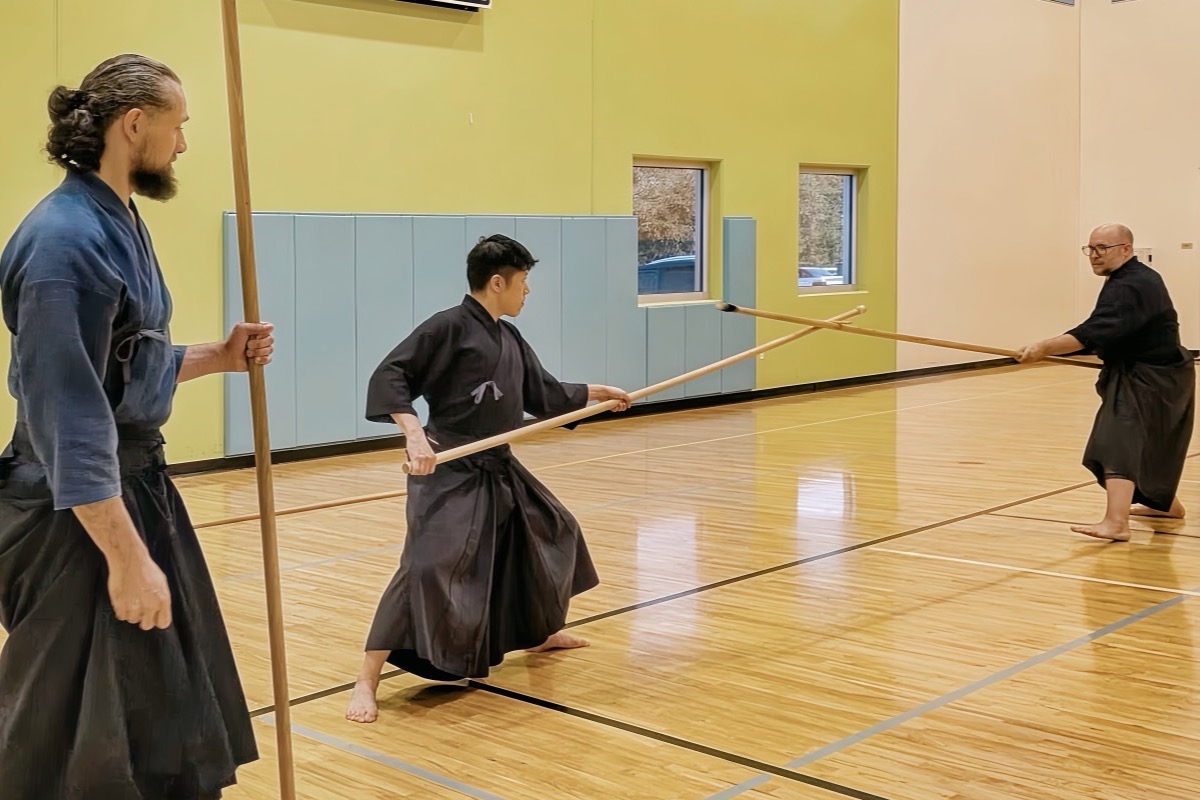
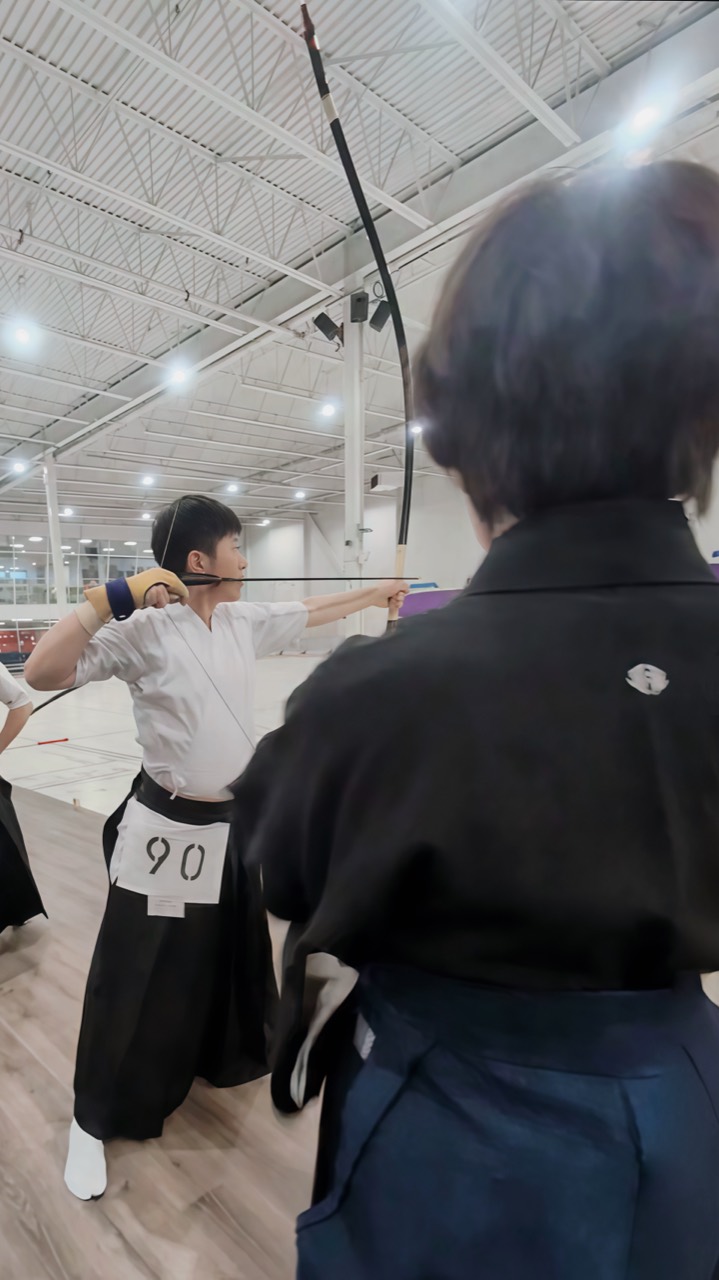
From Montréal, I traveled south to Stanstead, a small Québec town near the United States border, for a Tendō-ryū Bitokukai gasshuku. A gasshuku simplifies the day. Training is no longer fitted around ordinary life; for several days, ordinary life is fitted around training.
We returned to kata we already knew and compared details that become visible only after the larger sequence has settled. We also began new material and worked with kaiken and tantō. A shorter weapon changes more than reach. The body stands in a different relationship to the other person, and familiar judgments about distance have to be made again.
The formal instruction ended each evening. The investigation did not.
After showering, people gathered with drinks and snacks. Questions that might receive a graceful half-answer during training returned in less orderly forms. Practitioners from different countries compared what their teachers had emphasized, what they had seen in old photographs, how particular weapons had been made, and which version of a story had reached their part of the ryūha.
How does a Tendō-ryū wooden naginata differ from one used in modern atarashii naginata? Does the tradition consistently distinguish between small and large naginata? How do methods vary among different lines? How much of the sword curriculum survives? Each question sounded factual when first asked. After several people answered, it usually became a question about evidence.
A ryūha does not keep its past in one place. Some information remains in kata or terminology. Some survives in the dimensions of a weapon. Documents preserve one kind of record; teachers and senior practitioners preserve another. Memories overlap, diverge, and sometimes contradict one another. An anecdote may be valuable without being verifiable, and a confident explanation may still belong to a particular time, teacher, or line.
The conversation therefore required a different kind of discipline from the training floor. We had to distinguish what someone remembered from what could be documented, what a teacher had said from what a listener later inferred, and what was useful for understanding practice from what could responsibly be repeated as history.
This is one of the pleasures of studying koryū. During the day, the tradition is encountered through weight, distance, timing, and correction. After hours, it appears as a collection of partial records held by people who do not always agree. The kata may be carefully ordered. The memory of how they arrived here is much less so—and that disorder is part of what makes the investigation worth continuing.