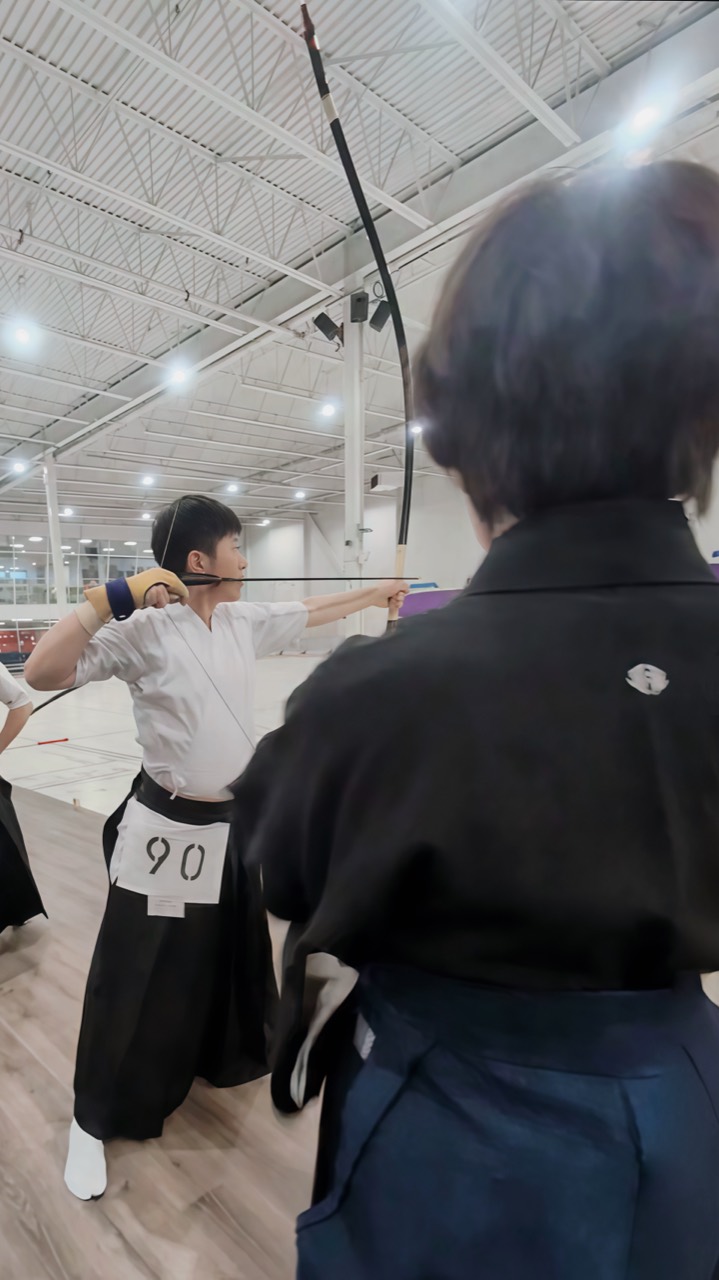
With the national taikai and shinsa approaching, the Northern California Kyudo Federation seminar in San Jose made every arrow feel attached to a future result. The target was still the same size. The distance had not changed. Yet it was easy to begin shooting at the event rather than at the target in front of me.
Taikai and shinsa create different pressures. In taikai, the result appears immediately: hit or miss. In shinsa, the judges see a larger presentation—movement, timing, composure, and the relationship between each stage of the shot. One emphasizes an unmistakable result; the other makes the whole process visible. Both reveal what remains stable when the setting is no longer comfortable.
That is why preparation cannot be reduced to shooting more arrows. The eight stages of shooting have separate names, but the body does not experience them as eight isolated positions. Ashibumi establishes the base for dōzukuri. Dōzukuri shapes what can happen in the draw. The quality of the draw determines what is available in kai and hanare. A rushed beginning does not stay at the beginning.
Seminars are useful because they disturb the small arrangements that make regular practice feel easy. The line forms differently. The waiting is longer or shorter. Other dōjō carry different rhythms into the same formal procedures. Nothing is radically unfamiliar, but familiar habits become easier to see when the surroundings stop supporting them.
As an important event approaches, the temptation is to search for one final correction that will make the shooting reliable. Kyūdō is not especially cooperative with this kind of bargain. A correction understood intellectually still has to pass through the body many times. Added too late or pursued too aggressively, it can become another piece of tension.
The useful work in San Jose was less dramatic: place the feet deliberately, allow the posture to settle, let the draw continue, and remain in the shot rather than moving ahead to the arrow’s destination. None of this was new. The test was whether it remained available while attention was divided among formal procedure, other archers, unfamiliar timing, and the wish to perform well.
I left the seminar without the reassuring feeling that preparation was complete. What I had instead was a shorter list of things worth protecting. The coming taikai and shinsa did not require a special version of my shooting. They required the ordinary version to remain recognizable after pressure entered the room.